My background is human resources and organizational behavior, and my interests revolve around training and development, organizational dynamics, and culture, but my passion lies in how relationships affect all of these areas; how attitude, beliefs, awareness, body language, word choices, and the like affect our ability to be driven, to be productive, to be successful. And like most, my own life experiences fueled my passion for learning more about what is known today as emotional intelligence.
I followed a fairly standard path – high school, college, job, marriage, children. And then I woke up one day and felt really uneasy about where I was in life. At 23, I was a wife and mother. I was still working two jobs trying to make ends meet and feverishly applying for jobs in my field of Human Resources with no prospects in site while my friends, both high school and college, were digging into careers and just beginning to narrow down the dating pool. Though I kept in touch with a lot of people, I slowly felt like my friends had no idea what my life was like. We were in different places, and we couldn’t really relate anymore. My husband at the time was a restaurant manager with crazy hours. I spent a lot of time at home alone with the tiny creature of a child. I worked in childcare for eight years; I knew what to do with him. But at the same time, I had no idea what to do with him! When the then-husband was home, he spent a lot of time unwinding with a bottle of wine – or 3 – and he didn’t really engage in the marriage. There wasn’t a lot of help around the house, and there wasn’t a lot of positive communications happening. I felt more like a single mom raising two children (one being my ex-husband) then I did a married woman. And I found myself at 24 questioning so many aspects of my life. I followed “the rules” and did what I supposed to do, so why was I so unhappy? How had I gotten so far off course??
I don’t know if there was specific moment in which I had an epiphany, but more that it was a steady buildup of frustrations. The details of the situations are for another time, but I sat on the floor next to my son’s bed, sad for him that he was in the middle of such a bad place. I rubbed his little head, and there was a point of absolute clarity. There was a certain kind of peace in that clarity, in knowing that the problems I was trying so desperately to fix were not my burden to bear. They were bigger than me, and definitely bigger than my marriage, and in that moment I knew that I couldn’t stay. I didn’t need a husband. I couldn’t fix him. But my son did need a father, and he couldn’t stay in the marriage and become the person he needed to become in order to be the father our son needed. I packed a bag, picked up my son in the middle of the night, and headed for the door. I don’t claim to be perfect, nor have I ever said I had no fault in the end, but for myself and my son, I decided to walk away and not look back. So at 26, I was a divorced, single mom, finishing a master’s degree, working two jobs and living on my sister.
That moment of clarity is the beginning of my journey into and through emotional intelligence. It was the start of realizing that I am stronger than I think I am most of the time. It was the beginning of soul-searching, of really focusing on what I needed in my life and a lot of narrowing down what I didn’t need and removing it entirely. It was the emotional struggle of divorce and all that comes with it. It was dating a few more frogs before finding my prince of a man who would become my king. And through the whole process I was able to start compartmentalizing the different areas of my past in such a way that I started to understand how my past shaped who I was and why I reacted so strongly on the emotional side to situations. I started to learn triggers and how to manipulate my mind to work through those triggers in order to stay grounded and logical. It was gaining a clear understanding of how my mind and emotions work together to form thoughts, opinions, and reactions.
They say time heals all things. I’m not sure that I ever fully recovered and went back to the person I was. I’m not sure anyone can go back after such hurtful times. But I do believe that I needed those times to grow. I needed to work through the anger and frustration I felt after my divorce. I needed to work through my feelings of abandonment and failure. I needed to work through the depression, the suffering, and the sadness. I am still a work in progress, but I am much stronger today than I ever have been before. And I know that it is because I worked towards being more self-aware in order to become the person I was meant to be.
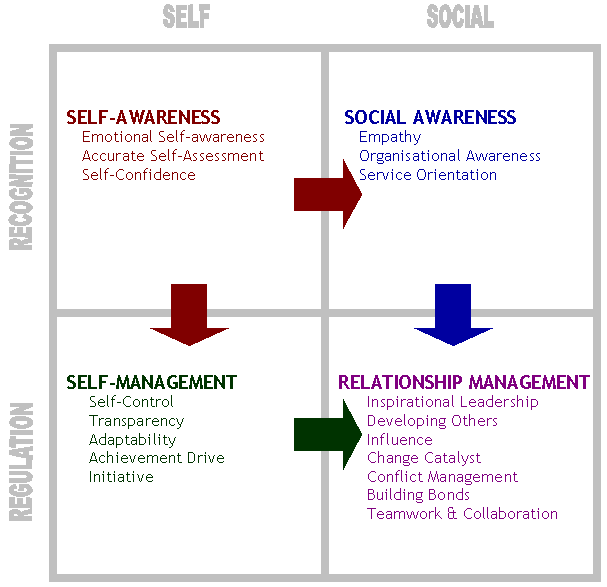
Self-awareness is the first step towards emotional intelligence, followed closely by self-management. Both of these steps gets overlooked a lot of times, mostly because the vast majority feel that they “know themselves well enough”. But I would argue that most people probably do NOT know themselves as well as they think. Or they are very self-aware but do poorly with the management aspect. If I could urge you in any direction for emotional intelligence, starting today, it would be to pay attention. Pay attention to the signs your subconscious is putting in front of you. Pay attention to your emotional being throughout the day, week, month. Pay attention to how your surroundings play into those emotions. Is it raining out? Who are you around when you feel certain ways? Did you eat breakfast today? How do these things affect you emotionally? What happened right before your last argument? What was the topic? Was it really anger that fueled it, or was it more likely due to fear or lack of control?
Start this process. Do it diligently and for an extended period of time. I started these thoughts at the age of 24. I will be 36 this year, and I’m still working through becoming more self-aware. It is not a destination, but the true form of a life journey. Change is a definite guarantee in life, and with change comes emotional instability and the opportunity to learn something new about yourself. Take advantage of those opportunities. Most importantly, be open to the learning curve and enjoy what it will bring your way.
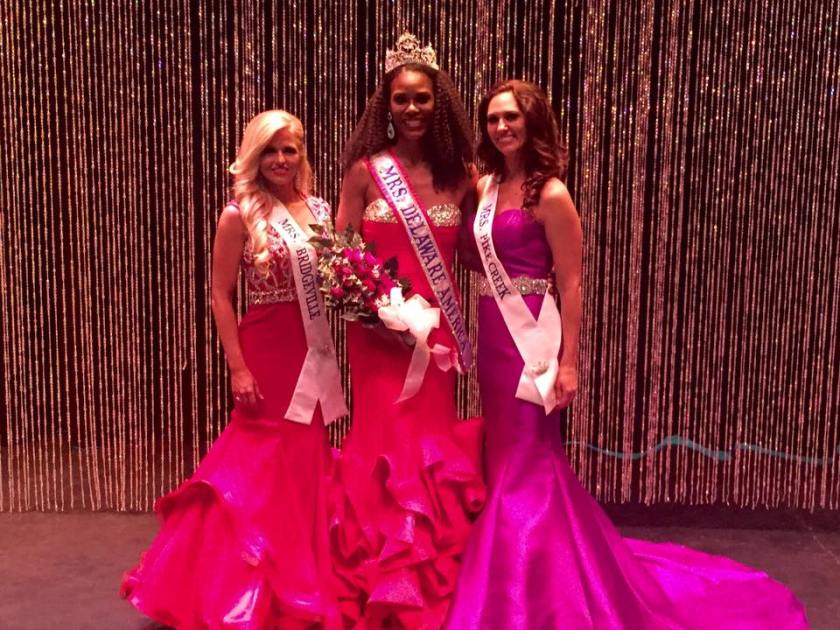
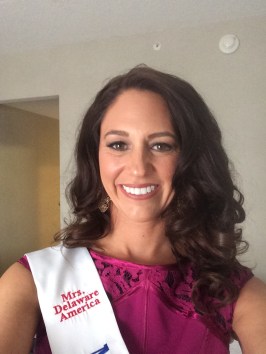 s bring some of the most intelligent and accomplished women to the forefront. I know it sounds superficial, and maybe even a little cliché, but there is a lot to learn from pageantry. Here is what I took away this weekend, and the lessons I can use in life:

 The E.I. Insider